
This post, going over the results of my using the recent winter storm to test some of my preparations and finding them lacking in terms of distilled water, generated some good comments and even several off-line conversations. As noted here, a wonderful person sent me a countertop water distillation machine. Another off-line discussion on water filtration sparked some other exchanges and discussions, with the net result a Zerowater system is now on my countertop as well.
As it turns out, the new Zerowater system is also very much appreciated, as testing has indicated that I don’t need to wait for an emergency to begin filtering my water. In fact, in testing my water I’ve found that it ranges from 500-900 parts per million of dissolved solids. A good municipal system is supposed to test out at 200. I knew there was a reason I didn’t like cooking, even unto boiling pasta, with the tap water. The old joke is that the water in Indiana is a semi-fluid state of limestone, and I’m now thinking that may not have been a joke after all.
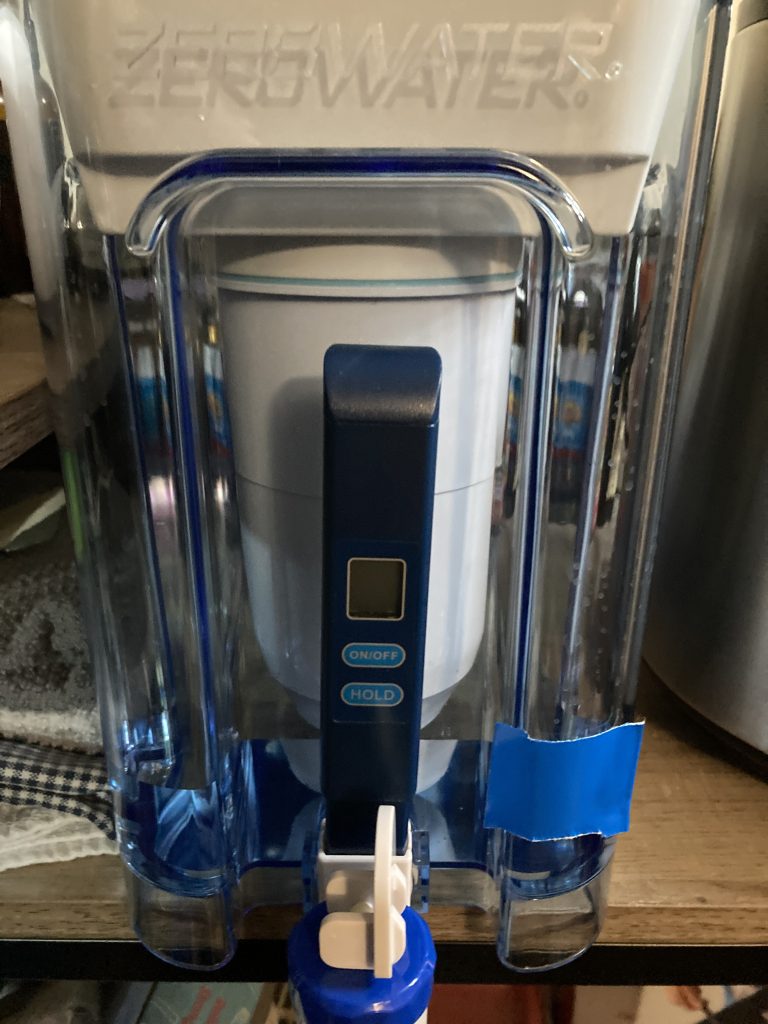
The Zerowater filters (5-stage) are expensive, so I bought an inexpensive Brita to try and pre-filter the water in order to get the most life out of said expensive filters. Sadly, the Brita only knocks it down about 100 ppm so I am going to look for another, better filter system and hope some of you kind souls might send some via my Amazon Wish List.
I’ve spent about a week now testing the water multiple times, testing out the filter systems, and most of all, testing out the water distillation system. Let’s take a quick rundown on the essentials.
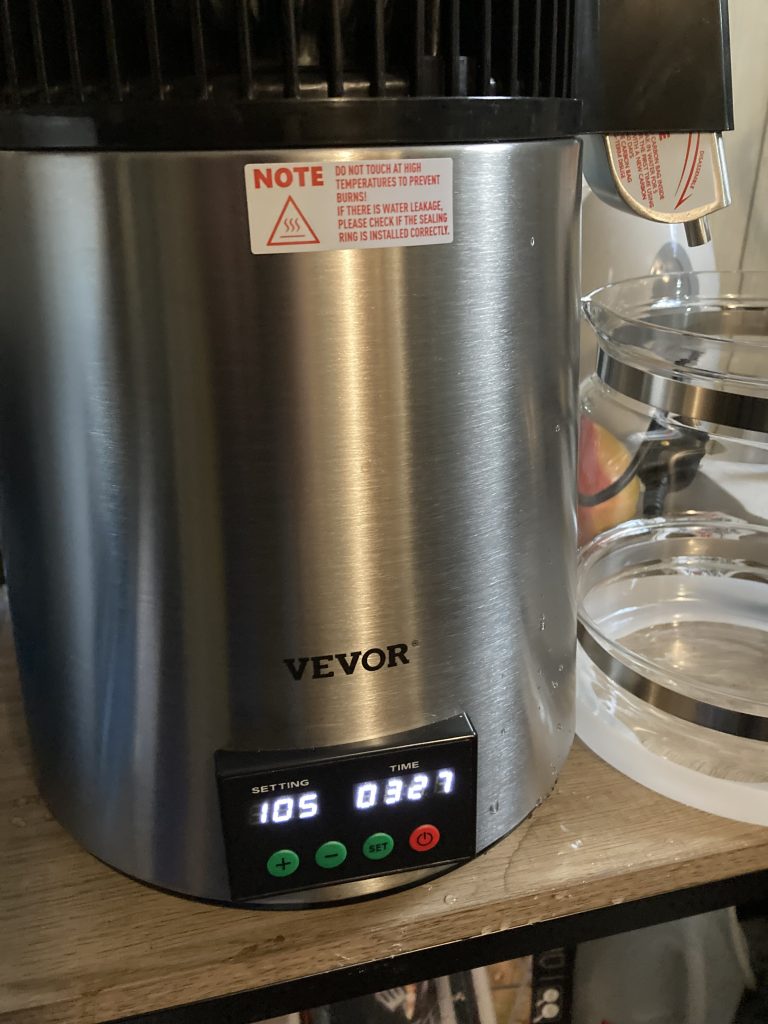
First, the countertop water distillation system is a blessing. It is a 750-watt system, and the power draw over the run times isn’t bad IMO. In fact, I doubt my landlord will notice it for a number of reasons. The outside of the unit does not get hot, though it does generate some noise from the durable fan system that cools the condenser coils. On a winter day, the warm to hot air that comes off the system is actually very much appreciated. Oh, it also has a chamber for packets of activated charcoal as a final step in the water production process.
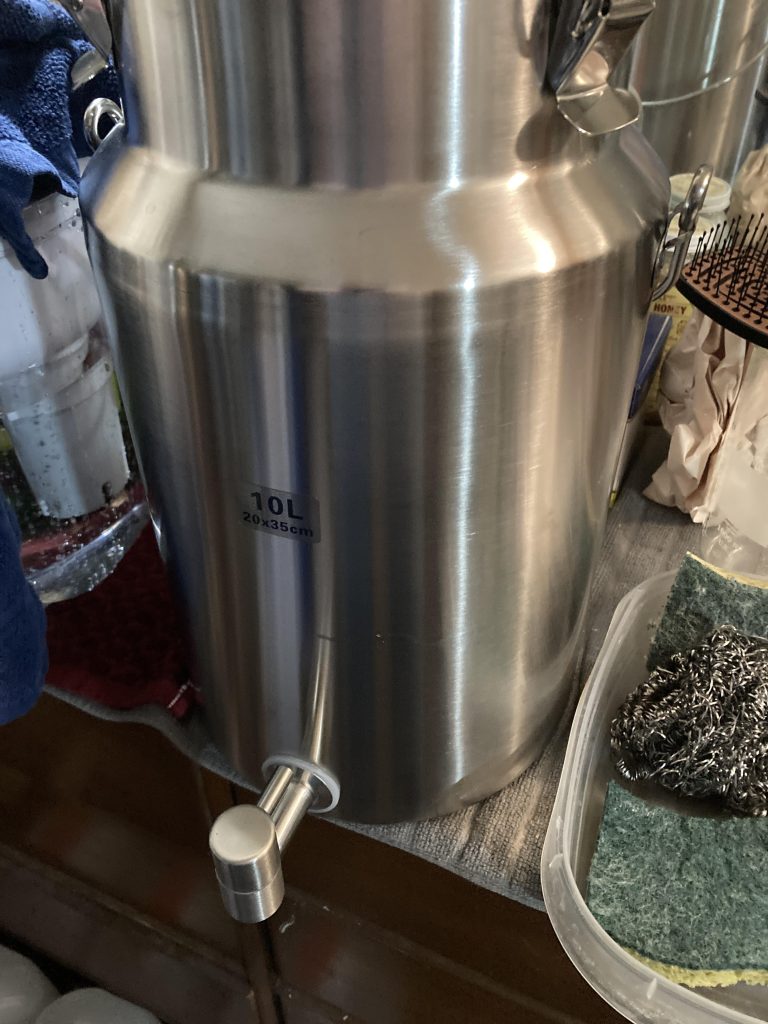
The standard run for the unit, using the manufacturer’s setting, is 3.5 hours. You won’t see much in the first 30 minutes as the system is set for 105 decgrees Celsius. By the end, however, you have more than 3 liters of water in the collection jug/jar/whatever you want to call it. Using filtered water, I’ve had very little scale build-up inside the distillation system. It comes with some cleaner, and the same person who sent it also sent me a jug of citric acid which is what is used to clean it.
I’ve tested the output a few times, and mostly get 000 readings, though one time I did get a 001 reading. It tastes as good or better than the store-bought and the cost is far less. Not all that long ago, distilled water was about 88 cents a gallon. Now it is regularly $1.50 or more a gallon, and stores around here seem to be having issues keeping it in stock, whether in 1 gallon “milk” jugs or the larger 2.5 gallon dispensers. Between drinking, the humidifier, and other considerations, I can use two gallons of water a day.
Which means that if I were using straight tap water for distillation, my pay-off for the unit would be in 4-6 months if I were paying for the water and the electricity. Since my rent includes both, payoff would be within a month or two. Your mileage is going to vary, but if you use a good bit of distilled water I think it a very sound investment.
Provided you have sources of power for it, it is also great for emergencies. There are a number of videos out on it’s use, and I have to admit the one where the person got the water to distill out of an overgrown and abandoned horse trough and got drinkable water was impressive. In checking around, it appears a number of preparedness types are using it, or something similar, as part of their disaster preparedness plans. I’m very glad to have this string in my bow.
Most of my previous preparedness planning has revolved around use of filtration. Sand/gravel filters are not hard to make, provided you have sand and gravel handy. I’ve got some units for camping and such that were part of my plans, along with things like coffee filter units for some initial cleaning. For the record, coffee filters are inexpensive and they can and do remove a fair bit of debris from unclean sources of water. In an emergency or full-up disaster, you want to protect the good filters by using things like sand filters, coffee filter systems, etc. to remove as much as possible before you use the good filters.
For example, if we had lost power and water in the recent storm, the snow is there and part of that water, water everywhere and not a drop to drink thing. Fact is, if you go get a bunch of it into a big pot to melt, you are going to be getting a lot more than just ice crystals. Best option, IMO, is to put the pot on a propane burner or such, melt and boil, and then pour the cooled water through some basic filtration to get rid of as much debris and contamination as possible. Then run it through the good system(s) for drinking. Boiled and light filtered is good enough for bathing, cleaning, etc.
The testing of my water, however, has convinced me that I am much better off using as much distilled as I can, and using filtered water for some cooking and preparation where I had been using tap water. In fact, I’m looking at a 5 gallon tank to replace/augment the current 2.5 gallon tank and at adding a larger non-countertop still that can be run off a variety of burners, or even over a wood fire in an emergency. Both of which are on my wishlist.
I also do want to note that the countertop water distiller can also be used for producing essential oils, hydrosols, and, yes, alcohol. On the latter, I must note that home distillation apparently still requires a federal permit on top of any state and local requirements. I therefore urge you to talk to a lawyer before doing anything that might violate federal, state, or local laws, rules, regulations, etc. I also strongly suggest that if you don’t know what head, heart, and tails are you should stick to water. You can make yourself sick or blind if you don’t know what your are doing.
The best part of my childhood was spent in the mountains of NE Georgia. I knew a couple of people there who knew a thing or two about producing untaxed liquor. They are why I am picky and careful, because they knew people who weren’t. As a result, they had a good pure copper system and did things right. You didn’t have to worry about lead or other things in the system, and the head and tail were not included in the final product. Not saying it was a polished commercial product, but for white lightning it was pretty good. Some of the other stuff floating around, however…
As for me, I plan to find something to replace the Brita that gets more out as inexpensively as possible. That way I can get the longest possible life out of the Zerowater filters. I may go to just tap water in the water distiller, but want to continue to play around with things so that I have not only a good system in place for everyday use; but, also have more strings to my bow for emergencies.
To everyone who has sent things to me via the wish list and such, THANK YOU. I can’t tell you how much I appreciate your gifts. Not only are they helpful, they are FUN. Thank you. More soon and will update on things as time goes on.
Getting hit by lightning is not fun! If you would like to help me in my recovery efforts, and to start a truly new life, feel free to hit the fundraiser at A New Life on GiveSendGo, use the options in the Tip Jar in the upper right, or drop me a line to discuss other methods. If you want to know some of what it is going for, read here. There is also the Amazon Wish List in the Bard’s Jar. It is thanks to your gifts and prayers that I am still going. Thank you.
Big fan of our gravity berkey
Will look into that, thanks!
You might want to look into the long term effects of consuming only distilled water. Distilled is great for chemistry, and yeah, there’s nothing in it but water, which could be an issue…no micronutrients, for example. This isn’t necessarily a big deal, but in general municipal tap water is probably a better choice. There are taste problems in some areas, even with municipal water, and really hard water is a problem in several ways too…but as with everything else in food, the less processed the better. Humans are adapted to ‘regular’ water (well, wild, municipal -eg, grossly clean/disinfected).
Good points, though I disagree on municipal being the better choice. For a more detailed response, see my reply to GWB. Thanks for posting.
The old joke is that the water in Indiana is a semi-fluid state of limestone
At least you don’t get your drinking water from the Potomac.
As to distillation….
I have understood that drinking primarily distilled water is dangerous. Mostly because it harms the absorption cycle, I think. Your body is designed to use water with stuff in it. Do you disagree with that, or do you have another step in all this that mitigates the possible problems?
LOL! Thank goodness I don’t!
As for drinking distilled, I’ve heard that too and think some of it boils down (yep, went there) to the fact that everyone’s physiology is different, just as water supplies have different tastes and quality levels. For me, switching over to mostly distilled has not shown to have any difference in the blood work. After the lightning strike, I’ve been getting pretty comprehensive blood panels done every six months, and I’ve even used that to see how effective various supplements were and if they were worth the cost. So far, there is no indication that drinking mostly distilled water has caused any issues but we are keeping an eye on things.
Now, I do add some “Lyteshow” to my water bottle if I am going to be biking a ways or working out. It is a liquid that provides magnesium, zinc, chloride, sodium, and potassium in a good ratio. This takes care of what I use/lose in working out and augments what I’m already getting from the multivitamin and supplements. If bloodwork shows I need to change that up, I can go to the local health food store and get the liquid magnesium, zinc, etc. and make my own version. I probably should get some and tuck away just in case…
If I lived in an area with decent water, that would make a difference I admit. I still miss the taste of the spring where we got our water in the N. Ga. mountains for years. Even the well we eventually had to drill wasn’t bad. The problem, IMO, is that a lot of municipal water supplies are not that healthy for you these days. By the time they treat it with chemicals and such, you lose a lot of the minerals and other things that would be considered healthy. The more I test and read here, the less I trust the water.
I actually came across a water distiller at a yard sale a while back. Lucky me! Though distilling your own water costs more than buying it at the store, the distiller will save you a trip if you need distilled water ASAP.
Concerning your Zero Water: I have one of the “box” units shown in your photos, as well as a “pitcher” model. The pitcher is used to extend the life of the filter in the box unit as follows: When the filtered water in the box unit reads above 300 ppm, I put a new filter in it and install the old filter in the pitcher. I then run the tap water through the pitcher and then pour the pitcher into the box. This extends the life of the filter in the box by several months! When the filter in the box again needs changing, I repeat the process. Also, Get your Zero Water filters on Amazon by the 6-pak. MUCH cheaper that way!
Also; since you’re new to Zero Water, use caution when handling the unit and the filters! Rough handling will kill the filter! You’ll know this has happened because the filtered water will smell like fish! Once this happens, all you can do is cry and replace the filter.
Thanks for the suggestions and information! I will be doing some more experiments with the systems here soon. 🙂