PayPal And Donation Update

If the site is slow loading or you’ve had trouble getting through, my apologies. We are experiencing growing pains as I move from regular blog to high-traffic blog. Working on it, feel free to hit the tip jar to help me keep going and upgrade the site. Your gifts truly do make the difference.

For the record, PayPal still hasn’t cancelled my account. They are still claiming that a ‘technical issue’ is preventing them from closing a number of accounts including mine.

Yes, it has been a hit taking them off here. There has been a significant drop in donations, the gifts that keep me going and will hopefully get me on out to the SW here soon. So much so I’m in a bit of a bind.

So, I’m in the process of jumping through the hoops to add GabPay as an option, and am exploring others. Any suggestions for a good alternative that isn’t going to play woke games?

*****

If you would like to help me in my recovery efforts, which include moving to the SW, feel free to hit the fundraiser at A New Life on GiveSendGo. Getting hit by lightning is not fun, and it is thanks to your gifts and prayers that I am still going. Thank you.

Preparedness On The Fly: General Thoughts

If the site is slow loading or you’ve had trouble getting through, my apologies. We are experiencing growing pains as I move from regular blog to high-traffic blog. Working on it, feel free to hit the tip jar to help me keep going and upgrade the site. Your gifts truly do make the difference.

For all that I’ve tried to keep these posts on an introductory level, it’s not always possible and worse yet from your viewpoint if you’re new to nuclear or preparedness, there’s a heck of a lot of information. Easy to miss some things, so I want to bring a few things up to the front.

First, if you are reading this because you are rightfully worried about nuclear war and have never done any form of preparedness before, some advice. Don’t get overwhelmed, take it a bite at a time. Try to do your preparations so they work to enhance your life in non-disaster times and cover a variety of other disasters as well.

Second, if you have a question about this, about rational preparedness, or the concepts being explored in my hopefully-to-be-finished book Preparedness Pays, ask. There are stupid questions; however, yours probably isn’t one of them. If you are thinking of asking it, know others are probably thinking it too. Do them and yourself a favor, ask.

Now, on to some other things that I’ve said, meant to say, etc. One of the sucky parts of getting hit by lightning is having the short-term memory of a mayfly. May they be right on it eventually healing in a few years. Anywho, onwards.

Buy shelf-stable foods, not those that require freezing, refrigeration, special conditions, etc. When buying canned goods, tuck away a couple of extra can openers too. In the box/area with the canned goods. Trust me.

Buy what food you can, including flour and other grains, and especially things like coffee, chocolate, etc. that are imported. I strongly suspect the food situation is going to get a little too interesting even if Vladimir doesn’t destroy the world in a temper tantrum.

If the button is pushed, go to minimum food and water immediately. Only exception is for food that can’t be saved (refrigerated/frozen for example). Large amounts of vinegar can come in handy on the latter, as you should cook and/or pickle and/or can as much as you can under the circumstances. Vinegar is also a reasonable disinfectant/cleaner/etc.

Buy food and some water filtration/purification gear ahead of anything else simply because of what is likely to happen with food production and distribution regardless.

Protection should be right after food. Remember that I highly recommend three levels for each person: rifle for long-range/hunting, shotgun for medium-range/hunting, pistol for short-range/hunting. Carry edged on you at all times you legally can. GET TRAINING!

One thing I did forget to include the other day is, in addition to whatever else you get, pick up a .22 rifle (and pistol if you can). Great for varmints, good for hunting, a number of uses in survival. Personally, several of us at work were discussing the need to have something tucked away in a vehicle for emergencies that was small, discrete/hidden, reliable, and useful. Idea evolved into a take-down 10/22 in a case with a thousand rounds of ammo. Inexpensive, and good.

BTW, 500 to 1,000 rounds of ammo in one caliber is not an arsenal or whatever other breathless sensationalistic prose the legacy media uses. If you start getting into this, 500 to 1,000 rounds of ammo per caliber is a good day at the range. Or maybe even the start to a good day at the range…

There is no such thing as having too many flashlights or batteries.

Did I talk about radios? Even if you followed some of the discussion in some of the Nuclear-101/201 posts and saved your cell phone, towers and service are probably going to be fracked for a while, possibly a very long time. Frankly, in the event of nuclear war, I expect to see sound trucks used in what’s left of metropolitan areas. Otherwise, think WWII and “This is London!” There are at least two different brands of emergency radio out there that include standard batteries, rechargeable batteries, USB recharging, hand crank, and even solar. You can get one that receives weather, AM, FM, and ShortWave (SW) 1 and 2 for around $40. If you can, get more than one. Oh, you can also use them to recharge cell phones and other devices that survive, including some rechargeable batteries. Useful.

Yes, two-way radios could be useful if you can shield them during so they work after. Problems are expense, range, and the fact that you might not want to be talking loudly and carrying on too much when out. Being able to report observations, issue warnings, advise on your location, talk to other vehicles if doing the boogie, etc. can be a very good thing. You just really need systems (that tend to be more expensive) that allow you to do so as quietly as possible and as hands-free as possible.

Noise and light discipline in the aftermath of any disaster, but especially a nuclear war, is a good idea.

So is the need to set and keep watch, and to be prepared if anything not-nice comes to call.

Sandbags outside doors going up 1.5 feet or more are a great way to block fallout from coming in under doors, and make the doorway an even better chokepoint when and if non-nice types drop by. It is also cover if needed.

Think I may need to do a column on the difference between cover and concealment, and that things that are really good at stopping radiation also work to stop projectiles. Interest?

Under the heading of good things to have around for life, much less emergencies, is a good pressure canner. And lots of jars that hopefully survive the disaster.

When it comes to some people’s cooking, certain foods, and field/emergency rations, hot sauce is you friend. Also, a great source of salt.

When you stock up, be sure to get some pogey bait.

Baby/body wipes are a very good thing to have in quantity if you are going to have to hunker down in a very small area for several weeks.

Also, while super large containers of anything, especially food, seem like a great idea, it also can be a single point of failure if damaged in the disaster. Buying multiple small containers (10 for $10, etc.) increases odds at least some will survive, and offers you items for trade, for being kind, etc. Not to mention portion control, as well as reducing temptation for someone to take just a bit more…

Liquor miniatures work well for medical use (pouring over wounds, etc.), are excellent for trade or reward, and can prevent problems in the shelter if used like the old British Navy rum/grog ration. Staying drunk during and after may seem like a good idea, and tempting a little, but it is a very bad idea.

Understand the concept of lifeboat rules. If you don’t, you need to. Think this is another column, esp. give how some are likely to react.

Wish I could remember what else I meant to cover, but failed to write it down, and so it’s gone. I live by lists, electronic and paper, post-it-notes, and even field note pads these days. Stupid lightning.

Preparedness On The Fly Series

Preparedness On The Fly (Food)

Preparedness On The Fly: Water

Preparedness On The Fly: Light

Preparedness On The Fly: Cooking

Preparedness On The Fly: Gear

Preparedness On The Fly: Protection

Of Interest

Preparedness: Bugout!

Buying Your First Weapon

Start Of All Posts On Preparedness

Nuclear Overview

*****

If you would like to help me in my recovery efforts, which include moving to the SW, feel free to hit the fundraiser at A New Life on GiveSendGo. Getting hit by lightning is not fun, and it is thanks to your gifts and prayers that I am still going. Thank you.

Nuclear Overview

Sorry for the slow loading or trouble getting here. Growing pains as I move from regular blog to high-traffic blog. Working on it, feel free to hit the tip jar.

With so many new readers interested in learning about preparedness and all things nuclear, I thought it might be a good idea to provide links to all the Nuclear 101/201 posts as well as the complete (for now) Preparedness On The Fly series. For those digging into nuclear war and strategy for the first time, there is some basic information along with suggestions for learning more. If you are wanting my takes on what is happening and why, hit the Current Events category. Also, some other posts of interest and non-blog resources of interest are included. .

Nuclear 101 Posts In Order:

Nuclear What?

Nuclear 101: Weapons

Nuclear 101: Delivery

Nuclear 101: Now What?

Nuclear 101: Targeting

Nuclear 101: Scenarios

Nuclear 101: Survival

Some Quick Thoughts

Nuclear 201 Posts In Order

Nuclear 201: Some History

Nuclear 201: Will You Be My PAL?

Nuclear 201: A Bit More C&C

Nuclear 201: Additional Thoughts On Coms

Nuclear 201: Targeting, Take 2

Nuclear 201: Scenarios

Nuclear 201: Policy, SIOP, and Escalation

Nuclear 201: Effects

Nuclear 201: Radiation

Nuclear 201: Preparedness

Nuclear 201: Fallout

Nuclear 201: Fair Question

Preparedness On The Fly Series

Preparedness On The Fly (Food)

Preparedness On The Fly: Water

Preparedness On The Fly: Light

Preparedness On The Fly: Cooking

Preparedness On The Fly: Gear

Preparedness On The Fly: Protection

Of Interest

Preparedness: Bugout!

Buying Your First Weapon

Start Of All Posts On Preparedness

Fiction/Other Resources Highly Recommended

Pat Frank, Alas Babylon and How To Survive The H-Bomb And Why

Dean Ing, Pulling Through NOTE: I can’t commend any or all of Dean’s work on preparedness and survival highly enough. And, yes, I really wish I could talk to him right now. Also, if you come across any of Jerry Pournelle’s work on survival and preparedness, good add too though I would put Dean’s work first.

While not nuclear preparedness and survival, John Ringo’s Black Tide Rising series of books are extremely enjoyable (IMO) and provide a lot of very good food for thought for those preparing for any of life’s vicissitudes.

*****

If you would like to help me in my recovery efforts, feel free to hit the fundraiser at A New Life on GiveSendGo. Getting hit by lightning is not fun, and it is thanks to your gifts and prayers that I am still going. Thank you.

Buying Your First Weapon

Sorry for the slow loading or trouble getting here. Growing pains as I move from regular blog to high-traffic blog. Working on it, feel free to hit the tip jar.

After yesterday’s Preparedness On The Fly post (the series is aimed at those just getting into preparedness because of the nuclear threat) it seems there is some interest in my talking more about how to go about purchasing your first weapon. While a good bit of this will concentrate on pistols since that seems to be what most are interested in purchasing, we will cover some other areas as well.

Since most of you reading this don’t know me from Adam’s house wolf, a quick bit of background. I’ve been using edged tools and shooting since I was about six or seven years old. My father was a Marine marksmanship instructor who shot competitions for the Corps back in the early 30s. Based on some of his experiences after he went back in for WWII, he swore Gomer Pyle as a documentary. I was on the rifle team in high school while we had it, and did a fair bit of hunting as the family was not well-to-do and it put meat on the table.

Over the years I’ve had some unique and interesting opportunities that resulted in my earning military expert ratings with the M-16 and issue pistol despite not serving in uniform, and have the paperwork to prove it. I also was familiar with older H&K battle rifles, FN-FAL, all H&K machine pistols, Uzi, Mac-10, Galil, and a number of pistols of various types and calibers. I suck at trap and skeet, and would love to qual on a .50 if I could use someone else’s shoulder as my own is shot. I also know a bit about edged weapons and their history. I’ve written the odd article or encyclopedia entry on firearms. Yes, I am LW from Blackfive. I also truly miss helping people buy their first firearm, it was a job that — for the most part — I loved.

So, let’s step through what I did for customers who were buying their first firearm. Again, there is no one perfect weapon that is great for every situation any more than there is one magic list that tells you everything you need for preparedness. So, the questions begin.

First, for what purpose are you buying this weapon? Are you looking for home defense, car carry, concealed carry, competition shooting, or other? Makes a difference, as I’m probably not going to recommend most FNs for concealed (they tend to be larger), and I’m not going to recommend something with a 1-inch barrel for competition.

Quick pro tip, highly generalized: longer the barrel, better punch and accuracy in most cases. Larger/heavier can give more control, reduce felt recoil (why I recommended such for home defense). Medium to smaller are easier to conceal and most people can get them into battery a bit quicker. For the record, I really don’t recommend micros even as a backup.

Second, may I see your hand? The size of your hand makes a difference in what pistols I would show you. You have to be able to control the weapon, which means you really need to be able to get your hand comfortably around the grip. If it is not comfortable and/or you can’t get enough of your hand around the grip to control it, it’s not the right pistol for you. For example, while Glock makes good products, the angle of their grip is not comfortable for me, so it’s not the right pistol for me.

Third, is there a particular caliber you are interested in? It was interesting to hear what and why in a number of cases, which ranged from ‘my grandson said I had to get this caliber’ to one who heard the caliber on a TV show. We are going to skip all the Fudd drama on calibers and deal with reality. Remember what I said about calibers yesterday, stick with those for now. In terms of control and such, a 9mm is going to be easier to control than a .45 as it has less kick/recoil. Again, it boils down to what works for you and your individual circumstances. If you go with a different caliber, that’s good too. I had a couple of customers that for reasons of age or health just could not handle a 9mm or larger. We found what worked for them. Which makes my fifth recommendation all the more important.

Fourth, what type of pistol are you interested in? Yes, there are some single-shot precision pistols, some with a bolt action even. But, the real issue here is revolver or semi-automatic. And, yes, revolvers are a good and solid choice for a primary or backup weapon. I have carried them before and the Lord willing, I may again. Also, there are people out there who for a variety of reasons can’t work the action on a semi-auto. Again, and again, and again: you have to find what works for you and your individual circumstances.

Fifth, narrow it down to two or three pistols. You may just LOOOOOOVE one of them, but find two others you don’t think are too bad. Now, write down all the information, go to a range, rent them, and try them. Pro tip: tell the range what you are doing and most of them are going to be HAPPY to work with you, and even cut deals, as they are going to try to get you to buy from them rather than come back to me. Get some instruction, try them out, and see which one works best for you. As I noted yesterday, more than one person has found out that the pistol they just thought they were in LOOOOOOVE with either blew for them, or was just meh. It was one of the others that was the right one for them. My memory is fuzzy (stupid lightning), but I think one person actually ended up buying two of the pistols they tried.

Sixth, GET TRAINING ASAP! Knew someone years (and years) ago who was so proud of the gun they had just bought. Asked a few questions, and discovered that they had not only had not shot it but had not even cleaned the shipping grease off of it before putting it in the nightstand. Never went over to their house again as they were an accident waiting to happen. Get training, and spend as much time on the range practicing as time, money, and circumstances allow. Get snap caps and practice dry firing at home. Consider one of the laser practice systems as well.

Seventh, GET LEGAL TRAINING! Know the laws of your state, city, etc. Here in Indy I cheerfully recommend the Indiana Gun Law course at Indy Arms, which is taught by none other than noted 2A attorney Guy Relford. Taking a course like this, along with the actual shooting instruction, will keep you from doing something too stupid before, during, or after a disaster or apocalypse.

Now, let’s quickly go over other weapons/tools. Whatever you get should, ideally, be something you use for things other than a disaster. So, let’s keep that in mind as we move along.

Rifles basically break down into semi-auto and bolt action, though there are some truly unique things out there — in some cases way out there. Bolt actions tend to be reliable though your rate of fire is not going to be fast. If you are even thinking about the possibility of doing some precision shooting, bolt action might be the better choice. Semi-auto rifles are, for the most part, reliable. They have a higher rate of fire, which is not always a good thing. Again, circumstances matter. Caliber is up to you. Try the bolt or action multiple times, find what feels right and fits you best.

A quick aside: MAGAZINE CAPACITY IS NOT THE MAJOR CONSIDERATION IN CHOOSING A FIREARM! Not for regular use, not for crime, and not even for an apocalypse. If you come in and are talking about getting a firearm because the magazines hold a huge number of rounds, you’ve already hit my radar as a potential problem. Mention switches, holes, and other key words, and that is a sale that is not proceeding.

Pro tip: the people at the gun store have no legal requirement/obligation to sell you a weapon of any type. Good stores back their people on that. By law, if anyone sells you a weapon knowing, or having good reason to suspect, that you should not be buying a weapon, they can (and do) face prosecution too, not to mention losing for them and/or their store their Federal license to sell firearms. So, no, I’m not picking on you for race, gender, or other bullshit, I’m refusing the sale because you have just given me cause to believe you are going to do something illegal with it or are not legally allowed to buy it. Just like when you walk in to the store reeking of non-tobacco smoke and trying to pay for the purchase with a stack of small bills over a foot long you have on your forearm. Be kind to the person who may be selling you the weapon(s) you want, and for crying out loud be sober and clean when you go in to the store.

To continue, if your first thought is of firefights and point defense against ravening hordes, please rethink. A firefight or point defense may be a possibility, but the greater odds are more in keeping with “normal” criminal activity with one or two people trying to get you and/or your stuff. You may need it for hunting. Having lots of ammo is a good idea, but you might also consider that it’s going to need to last a while too. Spray and pray sucks big fat hairy warty ones under any circumstances. Precise controlled fire wins the day. It’s even better with friends beside you, so make sure everyone has weapons.

Moving on, shotguns. Today, semi-auto, pump, bolt-action, or single shot, are all reliable. Growing up, I remember when semi-auto (other than the Browning Auto-5) could be iffy and knew a number of old-timers who would not use semi-auto. Times have changed, and there is an impressive variety of options in shotguns and ammunition. I grew up with single shot then pump, but if someone wants to gift me an Auto-5 (yes, I am a fan of St. John Moses Browning) or that deluxe Super Black Eagle 3 with the neat coating, I’m not going to object. As before, find what works for you and your circumstances. If it fits you, it feels right, and you can operate it, it’s the gun for you.

Now, edged tools. They do come in handy in a variety of circumstances. A good axe can do a lot more than just split firewood. A good pocket knife truly is multi-purpose, and a good skinning knife is more than handy for large game. Think about options and possibilities, but I do encourage having a good pocket knife, a larger knife for larger problems, a good axe, and a good hand-axe/hatchet/tomahawk at a minimum. I will note that if things are at close quarters, you might be surprised at what can be done with a short sword or good knife. Other than getting what works for you, I do suggest paying a bit more for quality if needed, and get a good non-electrical sharpening system.

As I know my little rant earlier is likely to bring out the Fudds, or the survival equivalent, some quick thoughts on option planning. Immediately before, during, or after a nuclear explosion (or other disaster), your threat matrix is going to run heavily towards individuals, not hordes, unless you’ve violated the first rule of preparation club. For some time after, it is probably going to remain individuals as people with sense and opportunity are going to be taking shelter and staying there until fallout (or other) danger drops. It is after that, or if you have to do the bugout boogie, that the threat of groups becomes a real issue. That’s when training and having family, friends, and others who are also all armed and trained is a very good thing.

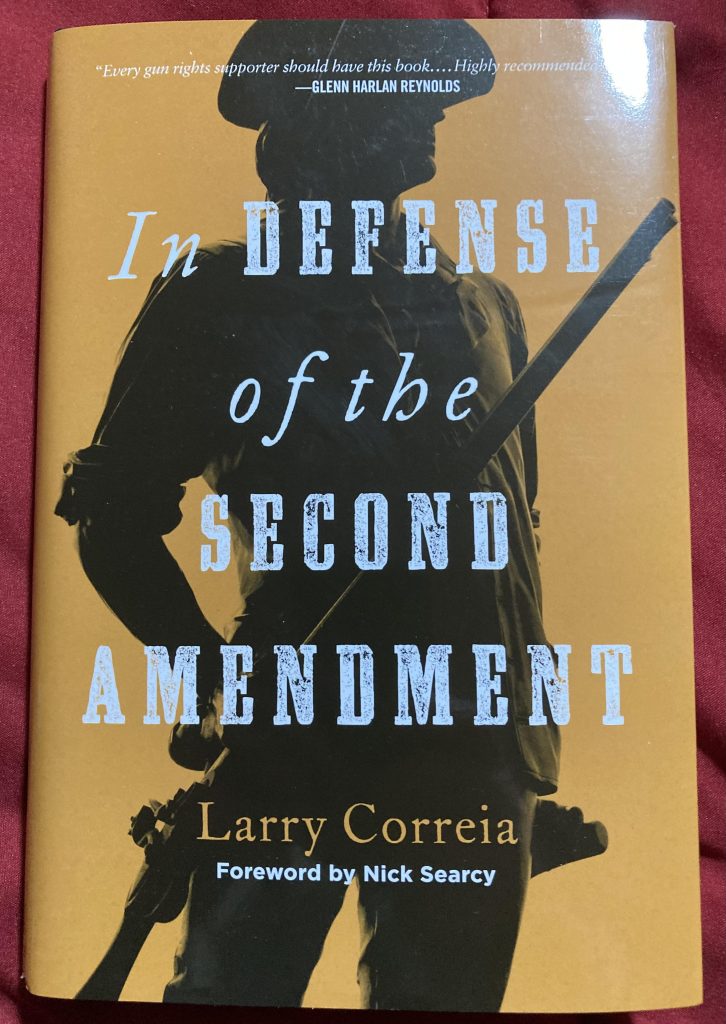
If you have some training and it shows; and, it shows that you are alert, ready, and will act, even a lot of gangs are probably going to go look for a soft(er) target. Don’t look like a soft target. Read Pat Frank’s Alas Babylon for some good ideas not only on surviving a nuclear war, but also a bit more on how and why to look like a hard target. When I talk precise controlled fire, read Larry Correia’s Monster Hunter Siege which has an excellent example of such near the end. It also emphasizes why you should not be the Chosen One and be able to bring friends with you. Also, when Larry talks weapons in any of his books, particularly the Monster Hunter International series, pay attention. Excellent choices in firearms, edged tools, and more (including tactics) though I prefer Streamlight for lights myself. A couple of more good fiction recommendations for enjoyment and some enlightenment.

*****

While I didn’t intend to write this as part of my Preparedness On The Fly series for those worried about nuclear war and just getting into preparedness, here’s links to the series if you are interested.

Preparedness On The Fly (Food)

Preparedness On The Fly: Water

Preparedness On The Fly: Light

Preparedness On The Fly: Cooking

Preparedness On The Fly: Gear

Preparedness On The Fly: Protection

*****

If you would like to help me in my recovery efforts, feel free to hit the fundraiser at A New Life on GiveSendGo. Getting hit by lightning is not fun, and it is thanks to your gifts and prayers that I am still going. Thank you.

Preparedness On The Fly: Protection

No, I’m not talking about the type protection that gets you lectured by your priest. It’s time to talk the third rail of preparedness: protection.

Over the years, several of us took to viewing it this way because this is when you lost people to the whole idea of preparedness, as well as bringing out the mentally-defective feces throwers. In the first case, you had a lot of posturing for politics as well as some truly thoughtful and sincere people who just could not stomach the idea of harming any living creature for any reason.

At least until their children were threatened. More than one such, over the years, has ended up going at something/someone bigger and stronger with nothing more than attitude and teeth when a child or family were threatened, and surprisingly often come out on top.

As for the latter, you have your ‘herf-derf you just want to fight government and you will die’ imbeciles (and that may be an insult to regular imbeciles everywhere), the ‘people are good we should just help each other you killer coward’ types, and those who feel the police and military will be there to protect them. While it is fun to fisk each and every type of idiot who pops up to throw feces, right now I just want to get you some solid information so you can decide what is best for you.

The fact is, in any disaster, there are going to be people that stand up and do amazing good for as many people as they can. Such people are wonderful, amazing, and we would all be the better if there were an order of magnitude more of them. Then, you have what are referred to in some circles as “ten percenters.” These are the people who loot, rape, kill, and more when the opportunity arises. The ones who demand food, water, and more but won’t do a thing to help. It’s a fact of life in this fallen world, and no amount of wishing is going to change it.

Nor is it going to change the fact that police, fire, EMS, military, and others just took the same (or worse) hit that you did. The military was the prime target of the attack, and that may include some National Guard facilities. As for the police and other local first responders, those that survived are pretty much in the same boat you are, and are trying to survive, check on family, and then do what they can to help. They are few in number to start with, and after the last few years with so many leaving in the face of defund the police and other such junk…

So, depending on your location, there may or may not be some organized efforts to rescue, get people out of harms way, etc. Your best option is not to count on such, and be prepared to handle things on your own whether you stay put or decide to do the bugout boogie.

If you stay put, your location represents a safe haven to the no-legged, four-legged, multi-legged, and two-legged out there. If you see giant multi-legged creatures, congratulations as you have just proven a rather abstract theory on reality shifts the hard way. As for the normal such, you need to be prepared for the short-term and the long-term. Which means you need to be thinking firearms, edged, and other as they provide protection from trouble at all times, and may later provide protection from starvation.

Firearms are the most contentious for a number of (mostly) political reasons. I am not going to recommend any specific firearm or type of firearm to you. What I will do is point out some food for thought in the course of which there might be some nudging but I will try to avoid it.

One thing to consider are the laws in your community. They vary, and I will not openly recommend defying them even in the face of disaster. You had the chance to deal with it at the polls before, now you’re stuck.

The second thing, aside from finances, revolves around caliber. You may remember my reference in the first article to “…probably the type Fudd who says you have to have all your firearms in .489 Harambe (or you ain’t s***!)…”. Fact is, most common rifle calibers out there are 5.56/.223 and .308/7.62×51 NATO because military and police use both in their weapons. You will also find a lot of 7.62×39 for AKs, and a variety of .30 caliber rounds of various types. In pistol calibers, 9mm, .45, and .38/357 calibers are in common use. In shotgun ammunition, 12 followed by 20, though there are good arguments for .410 both for availability and for hunting if needed. Despite what the Fudds may say, look at what you have the best chance of finding now and later.

Third, despite the Fudds and other interesting types out there, take the time to find what works for you, particularly with a pistol. I really loved it when customers would listen to me, pick out two or three they liked, then go rent them at a range and shoot them. It was interesting how often the gun they thought they liked the best was not the one they bought. Semi-automatic or revolver, same thing. What counts is control and accuracy, so take some time and find what works for you. Because if you can control the weapon and put a round on target, that’s what counts. If you can draw and put a round on target quickly, then it doesn’t matter if someone else has a weapon that can spit out 20 in a hurry. Really need to get into that more later in a stand-alone post.

Fourth, consider a mix. Rifle gives you long range, shotgun medium, and pistol short. There is no one perfect weapon for any situation. Oh, also consider that in either nuclear war or a zombie apocalypse, there are good reasons for everyone who is capable of handling weapons to have them. This is true fixed-base or on the move.

Now, consider edged weapons. Rather, think of them as tools. Knives and other edged weapons can do a variety of jobs, from cutting meat or rope to combat. Axes and hatchets again serve multiple functions destructive and constructive. Even swords can come in handy in some circumstances. Edged tools multitask, and it doesn’t hurt that a lot of people are more scared of an edged weapon than a firearm at close range.

Then, think about other types. Bow and arrow immediately comes to mind. I used to have a decent bow, can’t remember if it is buried in storage or what happened (stupid lightning). Good for hunting, quieter than a firearm, and again you have some range. Most of the time, an arrow can be reused. There are other options, take a few moments to consider if any of them work to your circumstances.

Finally, think about what you are willing to do to protect those you love, to keep them alive and safe from potentially horrible fates. Think about how you would deal with resource sucks, who take but give nothing back. Then pray, both to choose wisely and that we are guided away from disaster.

Then, do what works for you, your circumstances, and your location.

Oh, if you have the time, as we consider such things, look at reading John Ringo’s Black Tide Rising series, at least the first three books. A good solid look at preparedness, and particularly the things that have to be thought of in the context of protection. Also, a fun and easy read.

*****

Preparedness On The Fly (Food)

Preparedness On The Fly: Water

Preparedness On The Fly: Light

Preparedness On The Fly: Cooking

Preparedness On The Fly: Gear

*****

If you would like to help me in my recovery efforts, feel free to hit the fundraiser at A New Life on GiveSendGo. Getting hit by lightning is not fun, and it is thanks to your gifts and prayers that I am still going. Thank you.

Preparedness On The Fly: Gear

If the site is slow, or you had a hard time getting here, my apologies. Right now, my traffic is bouncing between normal small/mid-size blog levels and large blog levels. We think we have things steady for now, but it looks like we may need to add resources, which costs money. I may also need to hire someone to check and redo some of the code. Since things are beyond tight, and bills are due, it may be a while before I can upgrade further. Meantime, to help with that, or to help me pick up a few preparedness items myself, please hit the fundraiser! My thanks to all who have or will pitch in! And, yes, if I could move tomorrow I would.

As Alton Brown is with things in the kitchen, I try to avoid gear that can only be used for one thing. If you’ve read the other articles in this series, or any of my other writings on preparedness (start here and work forward), it is a song you will hear over and over again. For practical preparedness, I want things that will enrich as many areas of my life as possible.

But, many of you reading this series are new to preparedness, and rightly worried we could find ourselves in a nuclear war. I hope that sanity prevails, but I’m not prepared to bank on it. Never underestimate the power of human stupidity.

As I noted at the start, there is no one perfect master list of what you need. Circumstances vary. Finances vary. Local options vary. The posts give you an idea of what you should consider for each category, but what you need to get for each is up to you.

And so we come to my least-favorite topic: gear. There are people out there who are going to cheerfully tell you that you have to have this, that, or the other thing including that combo shelter, decon shower, and sauna that they just happen to sell. Reminder, if I mention it I do not sell it and I make no money off of it. Getting an honest opinion based off experience.

For preparing for a possible war, let’s start with some general gear that can have other uses. Maybe. First up, rolls of medium to thick plastic, and good tape. Large tarps also come in handy. Back when I owned a house, each room had a container with plastic, blue tarp, tape, nails, tacks, hammer, box cutter, chem-lights, and few other things tucked away in it. Why? Because if a storm or accident took out a window or windows, the last thing I wanted to be doing was trying to remember where things were, retrieve them, and then start trying to get the weather back outside. Everything needed for that, inside or out, was in the container.

In a fallout situation, you want to pick out an interior room and line it in plastic. Fallout isn’t an evil creature determined to break in and kill you. It is floating and falling out of the air. You want to use the plastic (or sheets, blankets, etc.) to encourage any that makes it into where you are to fall away from you. The more weather tight your home, the better. Bit late right now, but I’ve been pointing that out for a few decades now.

Provided your home isn’t damaged, and you have worked on making it energy efficient/weather tight, congratulations! That’s going to be a huge help. If your home is damaged, you need plastic, tarps, and other delights to seal it back up as best you can. Inside and out. Even if you are near a detonation, you have minutes to hours (depending on distance, wind, and other factors) to make repairs and take other steps. Use that time wisely.

If you don’t already have some basic hand tools (not power) such as hammers, saws, axe, mattock, pry bars, etc., get them. You may need them to get out of your home, work, or wherever you are when it goes off. You may need them to clear and make repairs. You may need them to rebuild. Good hand tools are an investment.

Now, back to gear. In this case, I would recommend a geiger counter, dosimeters, and either a gas mask or a full-face respirator. If things are bad, it helps if you can check the radiation levels around you, and monitor total exposure to you and others. Also, while you can spend a lot of money on either, the geiger counters and dosimeters that don’t do all the fancy downloads and online stuff work just as well. You are talking well under $100 for a box of dosimeter badges, and $100-$200 for a geiger counter, some of which even claim to be EMP resistant.

Now, remember that fallout isn’t an evil creature, it’s just something that will fall out of the air. Until it does, you not only want to keep it off you, you very much want to keep it out of you. Protect your mouth, nose, and eyes. There are disagreements over whether a full-face respirator or a gas mask is best. At this point, however, you are probably going to have an easier (and cheaper) time finding a decent respirator at the home supply or industrial safety store. Get spare filters.

Money tight? See if anyone is still giving away N-95 masks. That and some safety glasses or goggles (military, sport, whatever) are better than nothing. In a real pinch, keep in mind that 2-4 layers of t-shirt actually does surprisingly well in an emergency. That clear plastic you got? Tape some of it to a hat so that it hangs down a foot or so all around your head. Walk carefully so as not to kick up dust. You can also use it to improvise a poncho for going outside. Make that your outer layer, so that you can wash it and get most of the fallout off of you if you have to go outside. Remember that simply by taking off the outer layer, the experts say you can be removing 90 percent or more of any fallout that fell on you.

Another bit of gear is an emergency ventilation system. It can be a pipe with good filter, it can be something store bought and fancy, it’s up to you. But, in that secure space in the interior of your house, it’s good to have a way to bring in filtered air. I always admired Robert Heinlein’s house in Colorado, where the stair rail was a pipe with holes drilled into the bottom, which fed down to the filter and crank. Since fallout falls, having the holes on the bottom helped reduce the amount that the filter would need to deal with. There are a number of plans and products out there you can go with, just remember that if making your own or improvising on the fly it helps to have the materials ahead of time.

Oh, before I forget, one other bit of gear that if you don’t already have you need to get: a “standard” first aid kit and a trauma kit. If you need them, you are really going to need them.

Now, it’s not gear but seems to fit here as it will help you determine what you need: where are you? Are you in or near a target? Are you downwind of a target? A lot of preparation depends on the answers. There are some maps out there that can show you possible fallout patterns for the U.S. They are not guaranteed (hence having the geiger counter and dosimeters no matter what is smart) but can give you a good idea.

Clear area? Not going to have to worry as much. Under a red plume? You need to be prepared to hunker down for about three weeks according to Uncle Sugar. You are going to need more extensive prep and even materials that can block at least alpha and beta particles. Also, if you live in or near a target, remember that an air burst will be pretty much a zero-fallout event (just the neutron and then general radiation pulse from a radiation standpoint, nothing long term). Ground burst is going to kick up lots of fallout. Bunker busters/penetration bombs are nasty, but since a good bit of the explosion is underground the nasty fallout is mostly local. Yes, some over-simplifications there but accurate if not precise.

There is other gear we could talk, and I’m sure someone somewhere is going to complain about my not talking about/recommending MOPP gear, silver suits, and the like. Yes, if some of that gear showed up here, not going to object. I also think it expensive and might be hard to get on short notice. Also, MOPP gear really requires training (not so much a silversuit) to use effectively. Other than the geiger counter and dosimeters, really trying to keep this to things you can get local, hopefully easy, and not too expensive.

Now, there is one special type of gear that we will talk about later under the heading of protection. Not talking against fallout either. Yes, that is coming, perhaps even tomorrow.

*****

Preparedness On The Fly (Food)

Preparedness On The Fly: Water

Preparedness On The Fly: Light

Preparedness On The Fly: Cooking

*****

If you would like to help me in my recovery efforts, feel free to hit the fundraiser at A New Life on GiveSendGo. Getting hit by lightning is not fun, and it is thanks to your gifts and prayers that I am still going. Thank you.

Conventions, Conventions

Today brings us a guest post by Romulus Wolf, looking at the confusion between the Geneva and Hague Conventions, and the confusion over which treaties to which we (United States) are signatories. It does make a difference, especially with so many, ah, enthusiastic voices this, that, and the other to be a war crime. So, enjoy the food for thought brought to you by our much appreciated guest author.

The Hague and Geneva Conventions, universally agreed upon treaties that govern much of the laws of war… Well, not so much, at least where “Universally agreed upon” is concerned.


Ratification of individual provisions is often spottier than one might expect.
And not always in the ways one might expect either. After all, it’s one thing for the landlocked nation of Chad to simply not bother to enter into 1907 Hague Convention VII. Chances are that they’re not going to be converting many merchant ships into warships. It’s another thing entirely when a major naval power not only doesn’t ratify, but actively objects to that particular convention, on the grounds that t banning such conversions would put something of a crimp in their ability to flood the seas with (legally authorized) commerce raiders1. For the moment, the US is the only serious naval power that ISN’T party. All because we took the possibility of using private warships seriously as late as 1907(2). While the US is the only major naval power of the 20th and 21st centuries to not be party, not all of our company among those not party to the treaty consists of landlocked nations such as Chad, Nepal, or Mongolia. We also share company with Australia, Canada, New Zealand, Indonesia, Malaysia, Vietnam, the Philippines, and South Korea, all of whom have at least some potential for benefit from merchant ship conversions. Not that party to this treaty ever stopped anyone, as both Britain and Germany used merchant ship conversions as Q-ships in WWI and WWII.

Ah, but surely, as I have been informed by countless internet denizens, the ban on “Dum-dum” or expanding bullets in the Geneva convention has universal, or near universal adoptions? Well, to start with, that one is part of the 1899 Hague Conventions, Declaration IV,3, and it turns out that the adoption of this one is even more spotty. The map isn’t too dissimilar here, albeit with the very notable disappearance of all of Latin America – with the exception of Mexico – from the list of parties. For the most part, concerns about expanding bullets would seem to be a Eurasian phenomenon. The Americas, Africa, and Oceania are mostly not party to this particular treaty. So, unless you’re getting involved in a land war in Eurasia, don’t expect the bullets to be non-expanding – or, more accurately, don’t expect the laws of war to be the reasoning for non-expanding bullets, as most nations use standard ball ammo, regardless of whether they’re party to the treaty or not3.

Now, the Geneva Conventions do have rather better adoption – everyone worth noting is party to Geneva Conventions I-IV, but the additional protocols do get interesting. Additional protocol I, which does a lot, supposedly relating to the protection of victims of international conflict, has very broad adoption, but the list of non-parties is certainly quite interesting. The US, Iran, and Pakistan have signed, but not ratified it (and signature without ratification has no force), and notable non members include Turkey, Israel, India, and Indonesia. It’s sometimes easy to speculate why a nation may or may not have entered into a treaty when the treaty only limits a single or small number of actions, but with the Additional Protocols I and II of the Geneva convention, there is so much going on that figuring out anyone’s reasoning about why is probably fruitless – although it does bear noting that much of Additional Protocols I and II is duplicates of something already a part of the laws and customs of war, such as the prohibition on Perfidy (redundantly even within the protocol). The highlights of what Additional Protocol I does include bans on “works and installations containing dangerous forces”, a ban on “methods or means of warfare” that will cause “widespread, long-term and severe damage to the natural environment”, a ban on conscription of those under the age of 15, and ensuring that mercenaries are not given protection as legal combatants (note, the definition used is quite narrow – for example, citizens of belligerents, and residents of territories under the control of belligerents are not covered by the definition of mercenary, nor is anyone not taking direct part in hostilities). 

Of course, if we leave the realm of the Hague and Geneva Conventions for other treaties, things tend to be even spottier. Earlier this year, there were people getting the vapors over the fact that both Ukraine and Russia were using cluster munitions – not in the specifics of how they were used, which absolutely could have been war crimes (and probably were in at least some instances), but the fact that they were used at all – when neither nation is party to the treaty. In fact, given how spotty adoption of that particular treaty is, chances are that if a war starts up somewhere, at least one of the belligerents will not be party to the treaty.

So, why are international treaties on the subject of war lacking in universal adoption? How can nations such as the US, opt out of major chunks of both the Hague and Geneva Conventions? Well, to oversimplify how international law works, think of nations as individuals with Dissociative identity disorder (and frequently a good chunk of the rest of the DSM for flavor), who can only be bound by rules that they agree to, and each individual personality gets a vote. You can persuade, guilt trip, bribe, and use economic coercion, but in the end, some treaties simply won’t get signed without violence, or a credible threat of it 4. They can also sign with reservations, . And even when everyone involved is party to the treaty consider that in 1914 Germany, Britain, France, Russia, Austria-Hungary, and Turkey were party to 1899 Hague Declaration IV,II, which banned projectiles “the sole object of which is the diffusion of asphyxiating or deleterious gases”, and we all know how THAT turned out. So, for anything beyond the basics, and especially for more technical items, take claims of it being illegal under international law with a grain of salt, especially if they can’t tell you which treaty5 it came from, and definitely have low expectations where actually following the treaty is concerned.


Sources:
https://ihl-databases.icrc.org/applic/ihl/ihl.nsf/Treaty.xsp?documentId=D9E6B6264D7723C3C12563CD002D6CE4&action=openDocument

https://archive.ph/qDqpc

https://archive.ph/sIKqA

https://archive.ph/FxpDg

https://www.clusterconvention.org/

Preparedness On The Fly: Cooking

First, my apologies for the site being down as much as it is. I am apparently in the interesting state of being between just a regular blog and being a high-traffic blog. Some changes may be in order, and anyone caring to donate to help me pay bills and get the upgrades needed to ensure I’m up more often is much appreciated. I have bills to pay, been out of work courtesy of being struck by lightning, and am dependent for now upon the goodwill of others. Such goodwill, and the people behind it, are much appreciated.

Cooking, as well as heating, are two things often overlooked in media representations of disasters. While crouching around a fire in the ruined basement of a home heavily damaged by blast/other is a favored trope of the nihilistic dreck that passes for entertainment far too often, it sucks in real life and most will strongly avoid it. You should be one of those people.

The fact is, you should have multiple options for cooking (and heating) just for everyday disasters, much less Vladimir понимая, что у него нет члена and deciding to kick off WWIII as a result. Some quick thoughts follow.

First, practical preparedness would dictate multiple uses for any alternate cooking method. If you are just preparing now, you still want to think that way a bit. Now is a very good time to get a grill for example. I would point out that charcoal can handle wood and other fuel sources, and personally I prefer to cook that way. Choice is yours however and whatever you get will work no matter what happens. Plus, this time of year, the places that still have them tend to have them on sale, and being a cheap bas…, er, Scottish, that’s a big plus for me. If you get a propane grill, buy as many tanks as you can and fill them up. Tractor Supply Company or the like is your friend for that.

From my backpacking days, I still have a trail stove. Better than nothing, though it will not handle large cooking efforts. Small scale, it works great. Cooking for more than one, not so much. But, it works.

Now, I also have a portable chef’s stove like you see at a lot of Sunday brunches. Great piece of equipment provided it’s not cold out, as they use butane and it doesn’t do well near freezing or below. That said, mine has worked well at reasonable temperatures in the home during power outages and even in the field when I cooked for wolves. Yes, I used to do custom omelettes for older wolves at a wolf research and education center. Hit the fundraiser (note the reason) and I will share the tale on that, as you have not lived until you’ve been huffed at by a senior citizen wolf for not showing up with your stove and chef’s coat.

I also have a propane grasshopper stove. Runs pretty much no matter the temperature and can take a bit more weight than you might think. Again, have used it in the field and in the home during a power outage. Trust me, the world is much safer for me having my coffee in the morning, and I do what I can to ensure the safety of the world. It works, and you may be amazed at what you can do with one of them.

There are also multi-burner propane stoves and even ovens. They are primarily for car camping, but they work. Yes, I would love to have them and several tanks of propane for each. Feel free to hit the fundraiser and once bills are paid I will buy them. In a heart beat, along with extra butane for the chef’s stove. And, again, they are things you can use other than in an emergency. I miss camping, and look forward to getting the gear that will allow me to do at least some camping here soon.

You can also get stoves and such that run off kerosene, white gas, name-brand fuel, etc. They work and work well. Thing is, in a disaster, the name-brand fuel may be hard to come by, while propane may be a bit easier to find and transport. Your call, and having a backup to the backup is not a bad idea.

In a bad disaster, like a nuclear war, your cooking is also likely to be your heat. To beat that, look at kerosene and other heaters. You will need proper ventilation, so not recommended for fallout stage (about the first two to three weeks after boom, then dependent upon upper atmosphere winds). But, after that, or with proper ventilation, they can and do work well. I miss mine, as I sold them when I thought I was headed to Afghanistan a few years back. That you can use them to warm water, prepare tea, or do other things is a nice side benefit. Otherwise, get blankets and I recommend some of them be natural fiber like wool.

Strange as it may sound, I’m also going to suggest battery-powered smoke and CO2 detectors. Have at least one of each still in the package and stored in a basement or shielded area. After the boom, break them out and power them up. They can save your life in a true disaster, especially if you are having to improvise heating and ventilation on the fly. It’s far better to plan ahead, but if everyone had done that there would be no need for this series of articles.

Again, as with all the things discussed in this series, have multiple means and make sure some of them will work when/if you have to do the bugout boogie. That trail stove I mentioned that is not so great for fixed-base operations? Works great in the boogie though all should have one. But, this world is fallen and far from perfect: you can and will get by with just one.

And, also again, your local outdoor store is your friend as you prepare. While I still think there is time, shipping and the USPS is not your friend right now. Avoid them if you can. Also, keep in mind your local asian or other “foreign” food store. They often have a variety of cooking gear including alternatives, as well as bulk deals on rice and other items.

Tomorrow we may discuss gear a bit. I’m not a huge fan of gear and those who push it, but there are some things that come in handy at times other than disaster. There are also a few things that if there is a disaster, are well worth buying as a one-off. More soon.

*****

Preparedness On The Fly (Food)

Preparedness On The Fly: Water

Preparedness On The Fly: Light

*****

If you would like to help me in my recovery efforts, feel free to hit the fundraiser at A New Life on GiveSendGo. Getting hit by lightning is not fun, and it is thanks to your gifts and prayers that I am still going. Thank you.

And, yes, I need to pay bills this month and buy a few things for preparedness. Please do feel free to help.

Preparedness On The Fly: Light

My apologies for being down yesterday, that’s the first real hiccup with the new host and I am very underwhelmed with how it was handled. Thing is, know what to do next time in regards service. I’m also going to be exploring some options that may help deal with the surges. Feel free to hit the fundraiser, some options cost money and there are still bills to pay. My thanks to everyone who has helped!

The sad truth is, no matter what, darkness falls. The light goes away, and most of the time we flip a switch and an electric light banishes the dark. The problem is, electricity and the lights it powers, can and will go out. There are also times where you do need just an extra bit of light to check something out.

In practical preparedness terms, my decor has always included a fair number of candles and even oil lamps. I’ve also, in the past, had a generator as well as a variety of camping lanterns electric and other. Reminds me I need to check my Coleman as I loaned it to someone and from the sounds coming from the case I suspect it is busted. Sigh. I also have flashlights of differing sizes around, and usually have a couple on me, along with spare batteries. Power goes out inside a building and the emergency lights don’t work as promised? No problem. Also, helps when you have to try to read something or find something where the light is just not right.

So, with WWIII upon your mind, my suggestion is to get a mix as some or all may work after the boom. I get nothing from them, but will HIGHLY recommend Streamlight for your flashlight and safety light needs. I’ve carried and used their tac lights for years (including weapon lights), love the large HL-5X Protac flashlight I have (get about 2,000 lumens out of it with rechargeable batteries), and have never had to contact their customer service. You can find them at most good outdoor stores (use their website to find stores near you), or you can get their stuff at a decent price online from Optics Planet. Oh, for a number of reasons, make sure to have a headband-mounted light as part of your stock. Be amazed how often they come in handy.

Candles, well, you got a lot of options but allow me to make a suggestion. Find a place that sells church candles as they are designed to burn down slowly (and not make a mess) and as such last a good long time. Put up aluminum foil (shiny side out) behind them as reflectors, and you would be surprised at how much light you can get.

NOTE: Before lighting ANYTHING after a disaster, from a cigarette to a candle, check to be sure it is safe to do so! Earthquake or nuclear bomb, gas lines can break, fuel pipelines can spring a leak, even any stored propane or gas you have around might have spilled/leaked/etc. Only after you have checked, closed valves at need, etc. should you light up. If there has been a big boom nearby, the last thing you want to do is make a smaller one to finish the job the first started.

Now, I have camping lanterns because I used to camp. I also have used them more than once for power outages. There are a number of very good LED lanterns on the market, and while I would never take it backpacking (heavy) the LE LED lantern has worked well for me. Vont lanterns are okay, but not quite what I had hoped they would be. My Coleman lantern, well, sigh. Since I rent I also don’t have a shed or other place to store lots of fuel, so… Finally, I still have a few candle lanterns around. These were used a lot by backpackers as they were a relatively safe way to use candles at a campsite and, especially, in a tent. You can even get citronella candles for them.

Now, you can also get a generator to power the refrigerator and a few lights. If you have it stored in a basement or otherwise shielded, it may/should survive the EMP. Remember, if there is warning throw your main, throw the individual circuits, and unplug everything you can. Gives you the best shot at minimizing EMP damage. Make sure to have a secure location with ventilation to set it up. And, make sure it’s a quiet generator. Very quiet.

There’s something you need to think about with lights of any type, or a generator that makes noise and provides electrical lights. Lights are going to attract pests.

Disasters bring out the best in some people, and the worst in others. Light and sound are going to bring people to you. Some may be a blessing to have around. Some are not. My advice is to take the first rule of preparation club and give it steroids. Your best option safety-wise is to run dark, run silent, and run deep. And keep watch.

Oh, and stock up on batteries. Even ones you might not use, as someone else might need them and trade is going to be a part of recovering from a major disaster. It also gives you something you can give the authorities, if they come around looking to confiscate for the greater good, without giving up anything you truly need.

And, yes, you should hide as much of everything as you can because bad people (and yes I do count government types confiscating stuff as such) are likely to be a factor. Don’t make it easy on them. What few supplies I have these days are in my landlord’s box spring as no one will ever think to look there. Not that I’ve got much these days.

So, have a mix and stock up as much as you can. At some point in the recovery from any disaster, there comes a time where you want to light a beacon to guide others out of the dark. Be ready for that time, and until then think light tight and use what you do have judiciously.

*****

Preparedness On The Fly (Food)

Preparedness On The Fly: Water

*****

If you would like to help me in my recovery efforts, feel free to hit the fundraiser at A New Life on GiveSendGo. Getting hit by lightning is not fun, and it is thanks to your gifts and prayers that I am still going. Thank you.

Preparedness On The Fly: Water

Water is the item that you need almost more than any other thing in a disaster. You need clean water for drinking, you need water for washing and decontamination, you need it for cooking — you need it. Period. Yet, far too many can’t seem to handle the water going out even for a few hours.

To be truly prepared, you need three things: water, the ability to rapidly store more water, and the ability to make more potable water. You also need to learn the difference between potable, gray water, and non-potable.

Potable is water you can drink. It is clean, healthy, and what you are used to getting out of a tap, bottle, or other source.

Gray water is waste water that does not include sewage. Gray water can be filtered and purified to become potable. It also can be used to do things like flush toilets or other uses where water is needed for other than consumption.

Non-potable is water that, normally, contains sewage, chemicals, or other contaminants make it unfit for almost any use. It’s what goes into wastewater or other specialized treatment plants that clean it up enough to be released back into the world.

Violating the first rule of preparedness club, I do have both potable and gray water on hand. Part of the stock started with a job I had where I was having to carry in bottles of water to drink during the day as there was not easy access to water (or anything else). We will get into why if Jason Momoa wants to lecture me on the plastic bottles he can buzz off in a bit. Since I prefer to use distilled water for making my coffee, I have a small supply of it on hand. I also have two five-gallon paint buckets full of what is now technically gray water as it has been stored in non-sterile/non-food rated containers. Even though I added bleach to it to prevent microbial growth, it would need treatment to become potable.

The first two give me a source potable water that I can use for drinking, cooking, and other uses. I’ve had the fun joy of the water going out more than once, and more than once while I was in the shower or needing to get clean for work. My stored water has allowed me to get clean, rinse off, cook, and otherwise easily handle the minor disaster of having the water go off. The gray water has given me the ability to flush the toilet during those times. In any emergency, however, keep in mind the phrase ‘if it’s yellow, it’s mellow; if it’s brown, it goes down.” Save your stored gray water until you have to use it.

Now, since some disasters do give advance notice, you also need a way to store as much potable or treatable gray water as possible with such a warning. I have a variety of water bladders for hiking and such, water bottles/canteens, and even some collapsable containers in the car and inside. I would not mind getting several of the tub bags (WaterBob is the brand name I think) that hold 100 gallons each. Thing is, if you have warning, fill every container you can with potable water. Fill the tubs even if you don’t have a tub bag — it will need to be filtered/purified, but it is there when you need it. Use that water first, as you want to hold onto your portable supply in case you have to do the bugout boogie. Face it, your store-bought was designed to be stored, make use of that.

Now, this is a good time to discuss why I don’t care if Jason Momoa or any other celebrity doesn’t like my bottled water. Let’s say we are in a major disaster, and you are having to get into and stay in the shelter we discussed in the Nuclear 101/201 series because there is indeed fallout coming down. Unless you’ve got lots of plastic, tape, and shielding materials, your safe room does not extend to the restroom. So, you need something for that purpose.

As Dean Ing notes in Pulling Through, a five-gallon paint bucket makes a great emergency toilet. Put three garbage bags in it, and you have one you can keep using as you seal up the bags and put them out when the limit is reached. Heck, he even tells you how to make an improvised toilet seat. Allow me to strongly recommend that you only want to use it for fecal matter. Why?

Well, you really need to use any empty water bottles to hold urine. It’s secure storage, and in a really bad emergency you can (and will) drink it. In fact, you can “recycle” that way several times, but it’s diminishing returns each time. It also means you don’t have to leave your secure area to use the bathroom.

However, if you have a filter/purification system, you can process urine back into something close to pure water. The best option for such are to get the systems designed for backpackers and campers. They are light, sturdy, mobile, and very effective. If you have to do the bugout boogie, they are set to go.

You want systems that can both filter and purify, those being two different things. In fact, I mentioned yesterday that I would love to upgrade mine given advances in technology, and I would also add a couple of the large systems so that one could be dedicated to urine and such.

You can also improvise a good filtration system if you have uncontaminated sand. I would recommend getting the directions online (can’t remember if that’s one Dean got into in Pulling Through). A decent sand trap can handle some nasty stuff, and get you by.

It also won’t hurt to have some of the backpacking water bottles that have filtration and/or purification systems inside them. If we hit a fallout situation, the more times things are filtered, the better. That can also be important if you needing to purify water from tubs, urine, etc. If you don’t have one, but do have some of the water purification tablets, use them.

Also, if the taps are still working and the water is safe, refill your water bottles and other containers for as long as the water lasts. It’s when the taps stop working that it’s going to get interesting.

Also, while you are at the camping store, get two or more of those camping showers. You will want one for regular bathing if the water situation is good. You should, however, have two that can be used for decontamination. I’m not going to go into that process today, but you can use one such shower with gray water to do the first rinse of the outer gear so it is safe (as possible) to remove, and the second further in to wash the person.

You can improvise such easily enough, but they are not expensive and if you camp or hike, they are useful outside of a disaster. Just remembered how a member of my World Jamboree troop made bank by improvising one and selling hot private showers during the Jamboree. The official showers were open air (the local girls came and enjoyed the show), and the water came straight (and unheated) from a glacier-fed river (which reduced the show). Yes, he had more business than he could handle.

So, the rule of preparedness club on water is stock as much as you can. Be prepared to store as much as you can beyond that if there is warning and time. Be prepared to “make” more potable water at need. As with food, go to minimum needs at the start so you can make all you have last as long as possible. “Recycling” works, but you really don’t want to and if you do, you want to put it off as long as possible. Again, I’ve used my stocks and gear to handle the minor disasters of life more than once. Well worth the investment even if you don’t camp.

*****

Preparedness On The Fly (Food)

*****

If you would like to help me in my recovery efforts, feel free to hit the fundraiser at A New Life on GiveSendGo. Getting hit by lightning is not fun, and it is thanks to your gifts and prayers that I am still going. Thank you.