
First, an apology to you the readers. I had planned to get a post up yesterday, but didn’t make it. The breakfast I had on Wednesday with a friend, who has been a bit under the weather as it were, ran delightfully into the afternoon. It was so good to catch up with them, laugh, share some memories, and just live. Had to run an unexpected errand afterwards which took up the rest of the day. Yesterday morning I had coffee with two dear friends and then had errands to run before the storms hit last night. Had breakfast this morning with a friend and former co-worker, and am now catching up here.
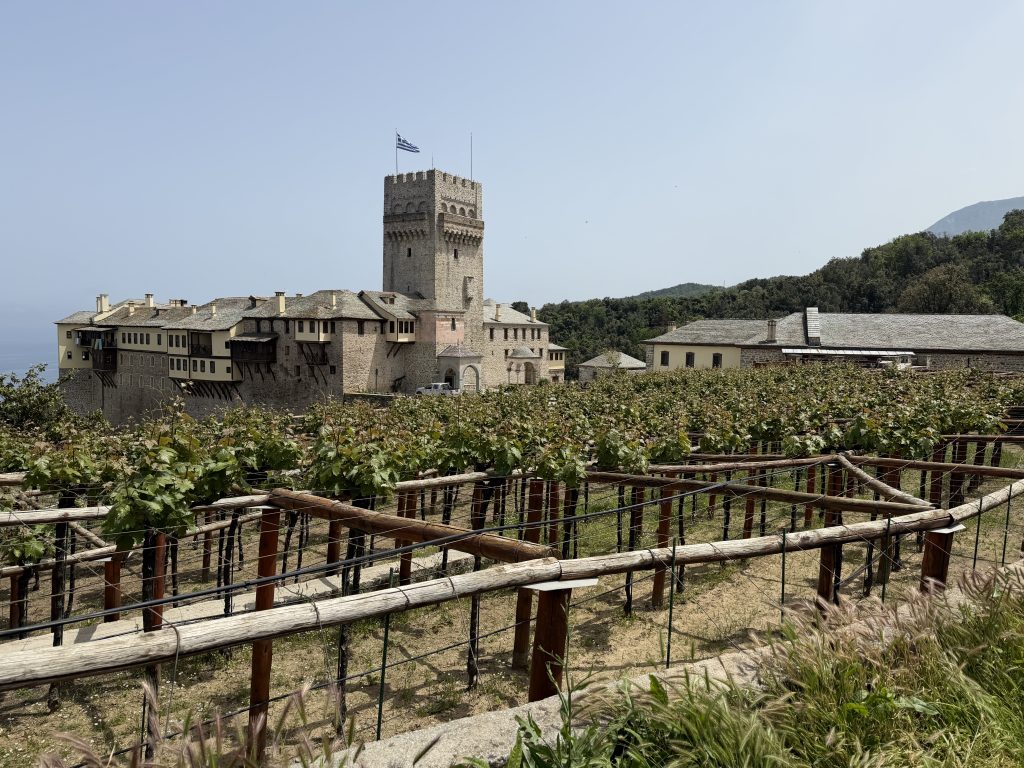
I also owe an apology to my “bookend” monasteries on Mount Athos. I sometimes glitch on their names. While each visit on Mount Athos was unique and even wonderful, so much happened at Vatopedi that it tends to eclipse everything else which is not fair to the other two. The first “bookend” is Karakallou Monastery and in some respects it was the perfect way to “break in” to the routine of life on Mount Athos.
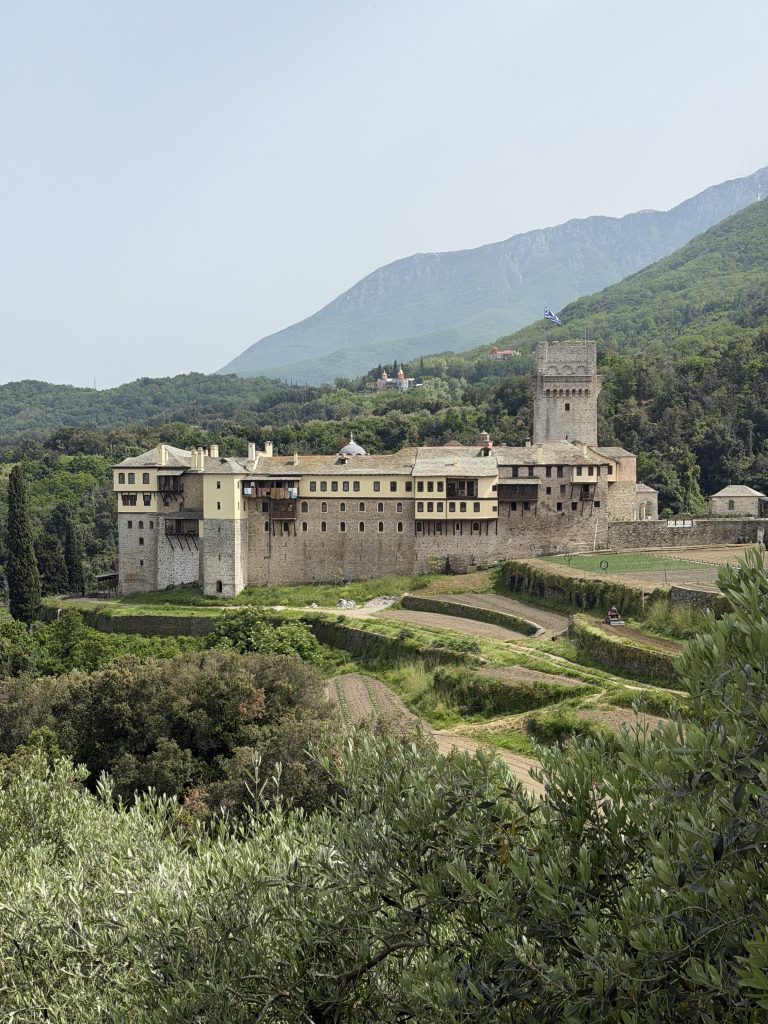
The monastery dates back to the 11th century, and is up a ways from it’s “port.” Something to keep in mind about the monasteries on Mount Athos is that each has (or had) it’s own port down on the coast. In this case, the port is about a mile down the hill from the monastery proper. The monasteries, be they on Mount Athos or elsewhere, strive to be as self-sufficient as possible. A lot of people seem to have the idea that monks are sitting in their cell (room) all day praying, and that’s just not the case. There are often animals for which to care; crops to tend, grapes to pick and wine to make, etc. It is not a sedentary life.
In the case of Karakallou, I would add to that list of chores expanding agricultural activities. While there, work was underway to expand grape and crop growing areas, and to repair and optimize such areas and roads. That was in addition to all the normal work of running a farm. One area next to the monastery had hundreds of onions planted, and we found out why later.
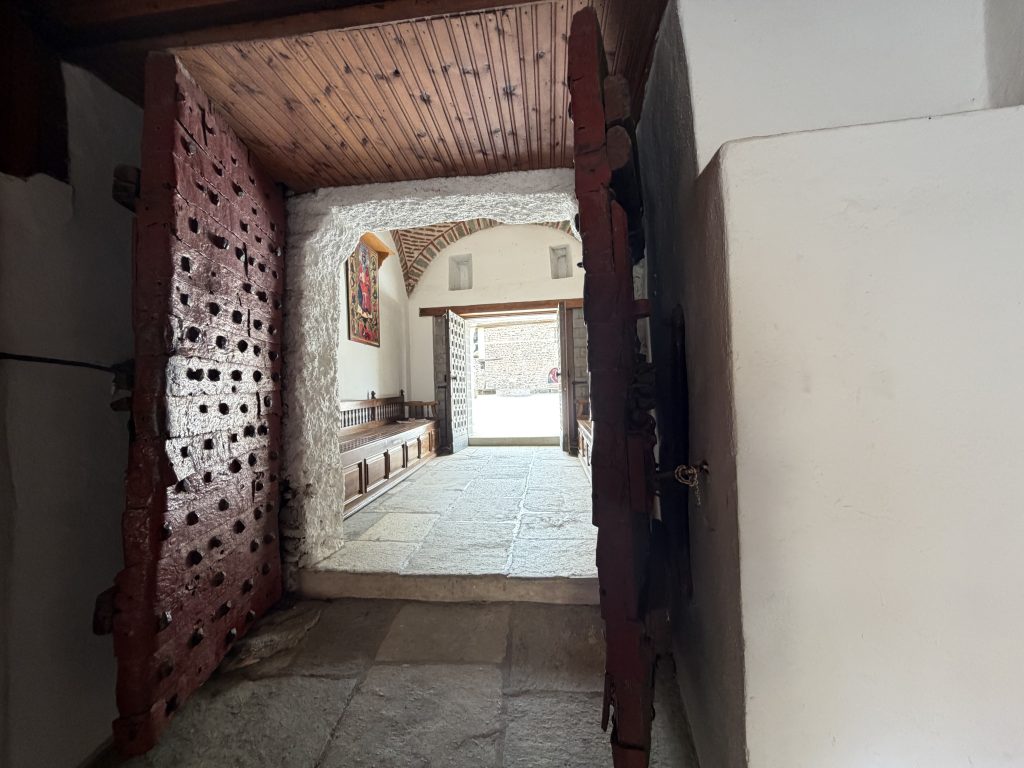
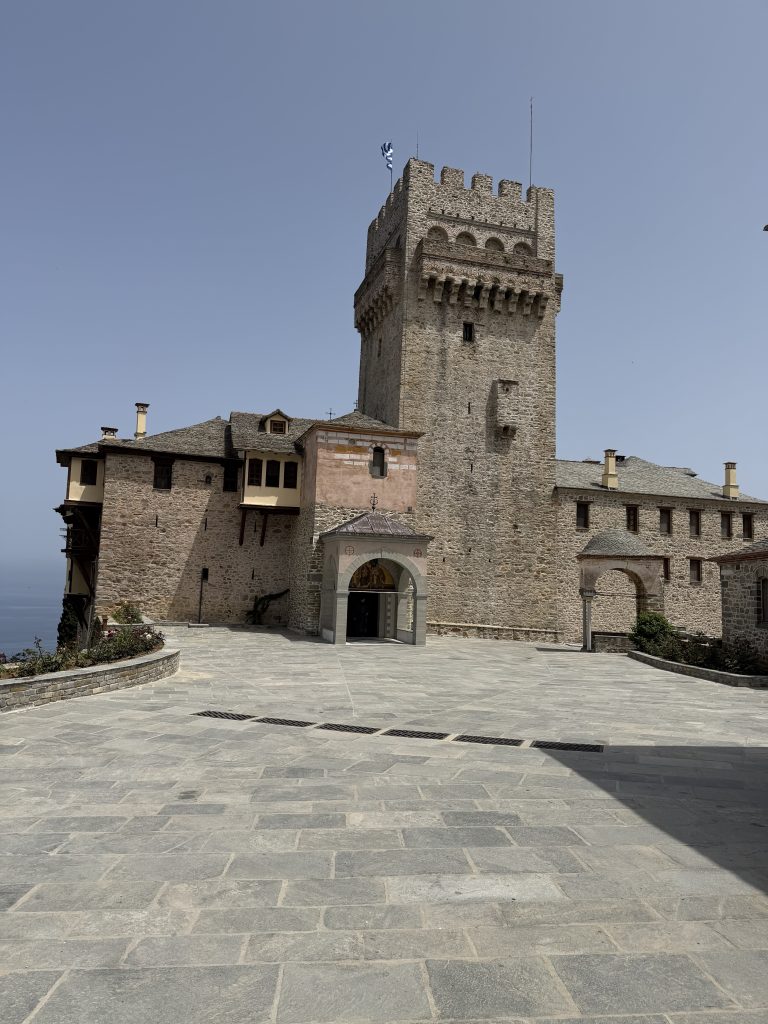
Karakallu is probably best known for the icon of Saints Peter and Paul (take it as a given that most icons I mention here are miraculous); but, it also houses relics of the True Cross and a number of saints. For most visitors, these will be brought out during a special time after supper to learn about them and have the chance to venerate them.
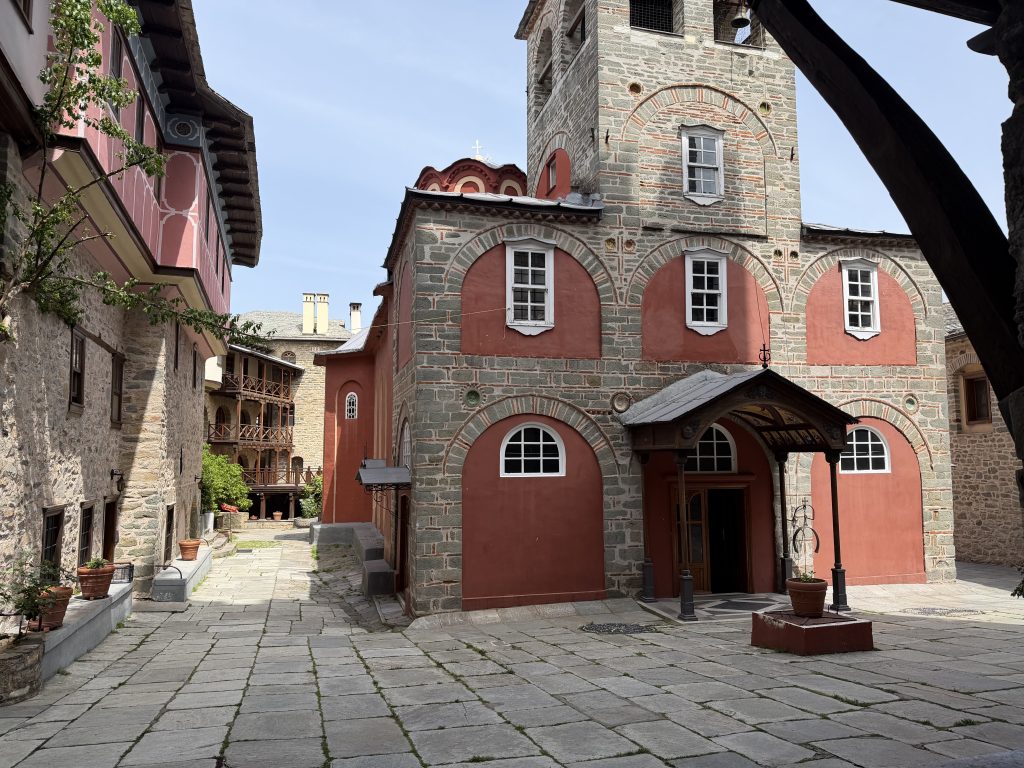
When I said it was a great place to break into the routine of life on Mount Athos, it truly was such. We were somewhat encouraged to go look around, hike around, and otherwise explore the area. Other than being back in time for evening services and dinner (and not getting underfoot), relax and contemplate. We did walk around a bit, checked out some of the expansion work, and for me at least, to shed the stresses and cares of the world outside. The evening meal also got me back into the monastic meals. There are prayers said beforehand, and one does not eat or drink until the abbot rings his bell. When the bell rings again, you put everything down and stop.
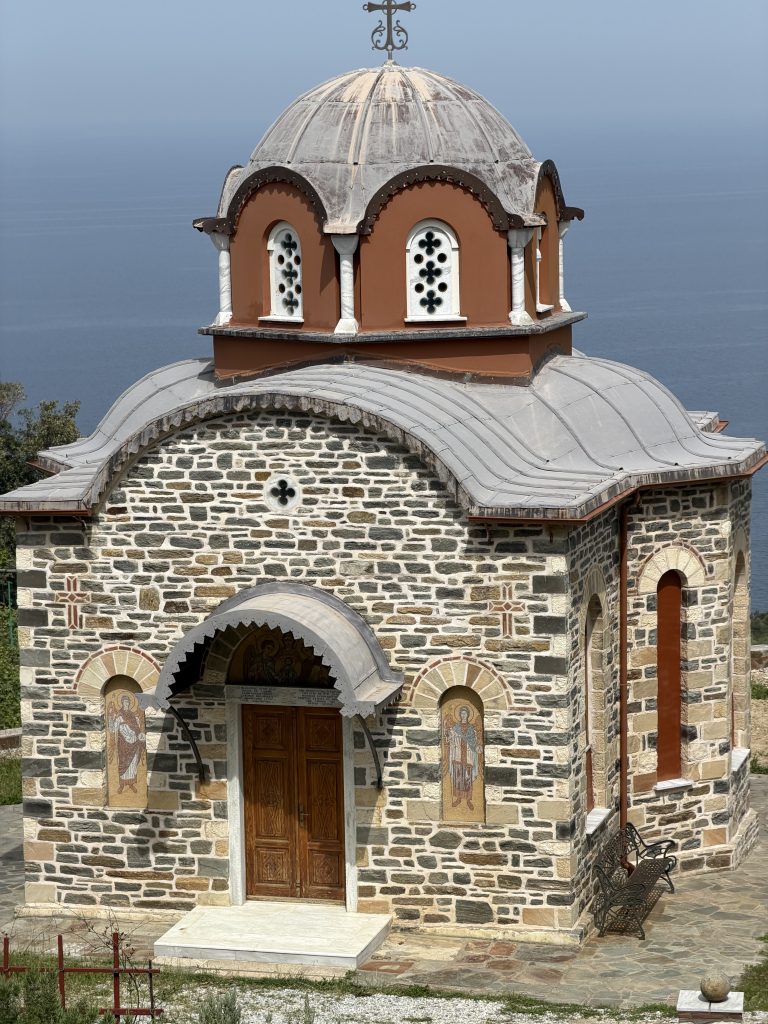
I mentioned earlier the onions being grown and at dinner that night we found out why so many are being grown. Dinner was a lentil stew, and it was probably the best such I’ve ever had. I can’t cook lentils all that well, but the monks clearly could. Next to each bowl was a green onion with a small bulb at the end, peeled and with the roots cut off. One ate lentils, took a bite of the onion, and it was delicious.
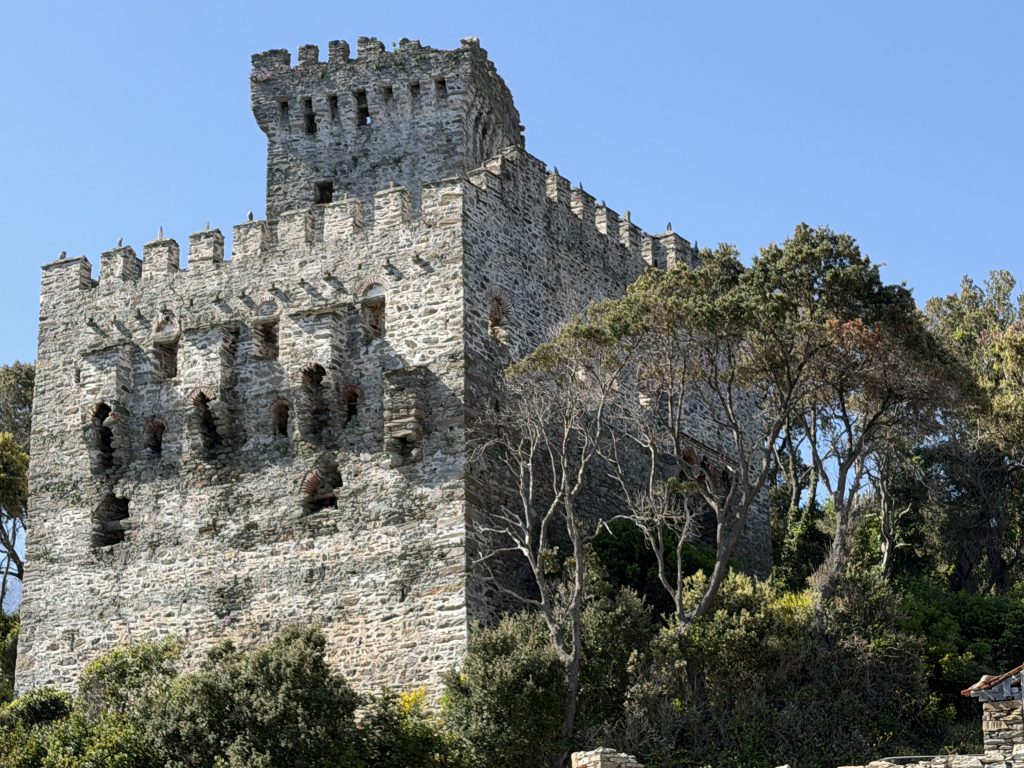
The next morning, we walked about a mile downhill to the old port, and the boat that services those ports came in and picked us up. We did have one small bit of excitement when a wild pig and piglets ran across the trail in front of us. Once we were sure all the piglets were across and they and mom were gone, we continued on.
Karacallou was a good place to shed the world and enjoy some quiet contemplation and prayer. That shift stood me in good stead for my visit to Vatopedi.